
Most garage door bottom seals slide into an aluminium retainer on the bottom of the door. Note the retainer type (single or double T-slot, bulb or J-type), measure the door width and the seal's flat width, open the door to waist height, slide the old seal out of the track, lubricate the track with soapy water and slide the new seal in from one end. Trim it 2–3 cm longer than the door.
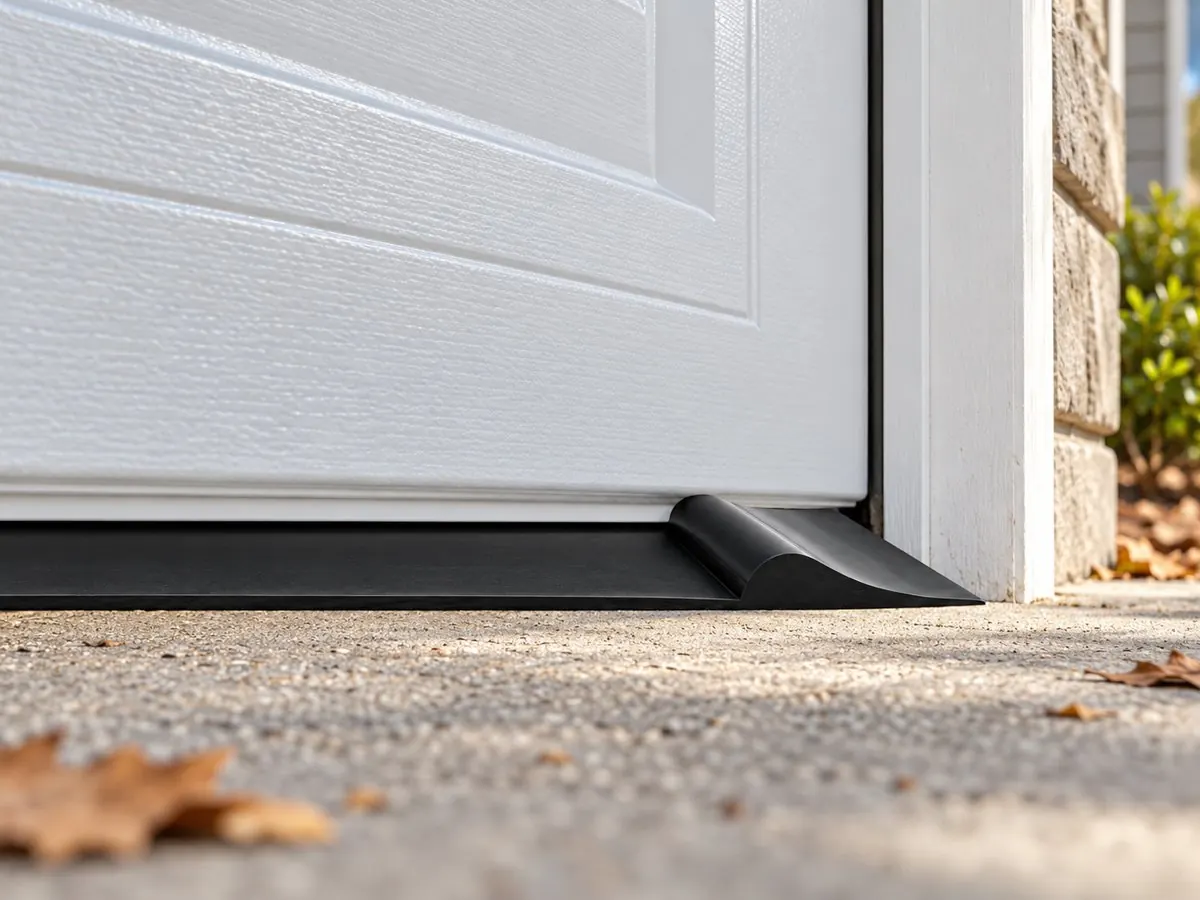 Illustrative
Identify the retainer
| Type | What it looks like | Typical door |
|---|---|---|
| T-type (double T) | Two T-shaped beads slide into twin slots | Most common on steel sectional doors |
| Bulb type | Round beads slide into round slots | Some steel doors |
| J-type | Hooked edges | Some older doors |
| Nail-on / screw-on | Flat strip fixed to a timber door | Wooden doors |
Step by step
- Open the door to about waist height and unplug the opener.
- Pull the old seal out of the retainer from one end.
- Clean the slots; spray soapy water to help the new seal slide.
- Feed the new seal into both slots at once, a helper pulling from the far end.
- Trim, leaving a little extra at each end; crimp the retainer ends.
- Close the door and check for daylight at the floor.
Uneven floor or rodents
For uneven floors use a taller bulb seal or add a threshold seal on the floor. An anti-rodent version with steel mesh is available for garage bottom seals. See garage door bottom seal types and the garage door seals range.
Quick questions
How do I know what size garage door seal to buy?
Measure the flat width of the old seal and check the retainer type; order the door width plus a little extra.
Can I replace a garage door bottom seal myself?
Yes – on a slide-in retainer it is a two-person job of about half an hour.
Need a seal for this?
Send your section, gap size or a photo of the old seal – Dora replies usually within 2 hours. Door bottom seals are available from 10 m.