
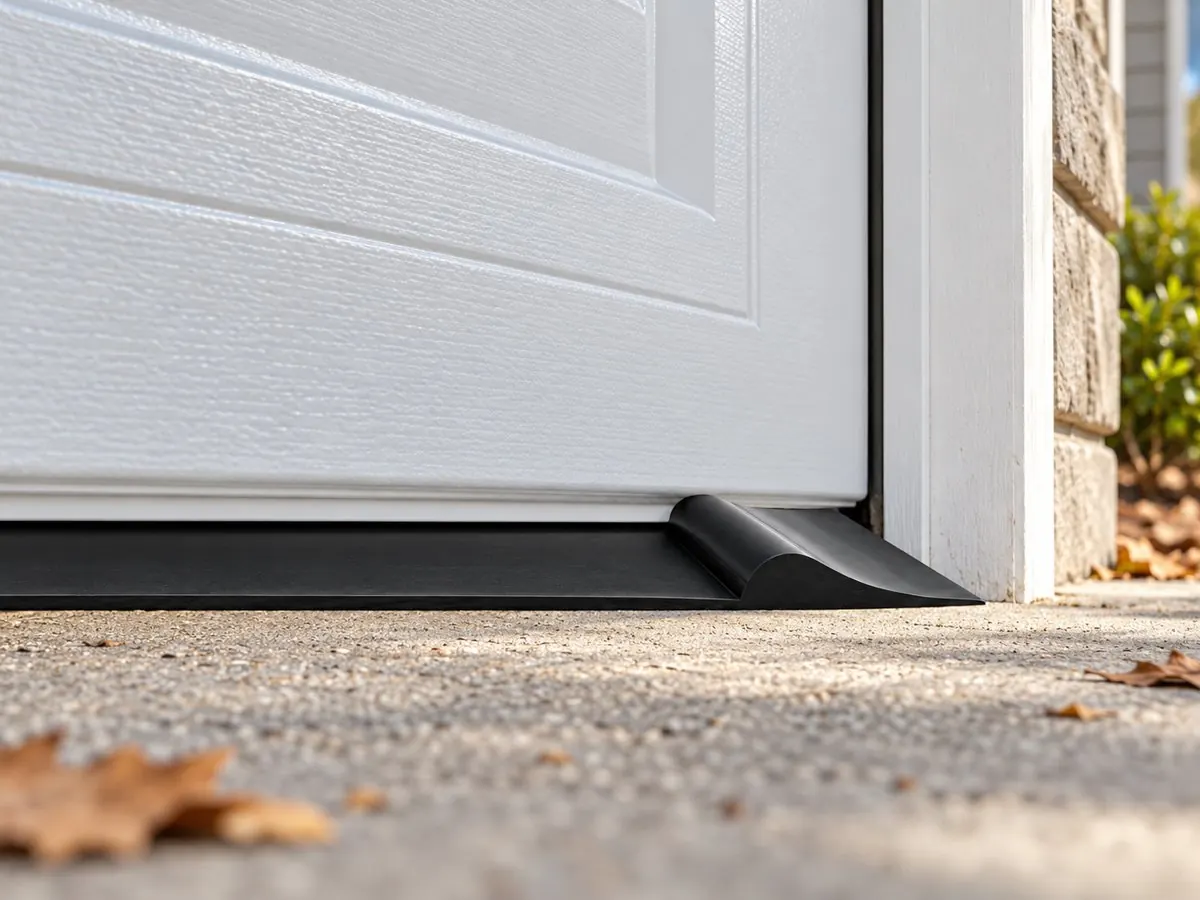
First identify how the old seal is held: a sweep screwed to the face of the door, a strip slid into a slot in the door bottom, or a self-adhesive sweep. Remove it, measure the door width and the gap to the floor or threshold, then fit the same type – the seal should just touch the threshold without dragging on the floor.
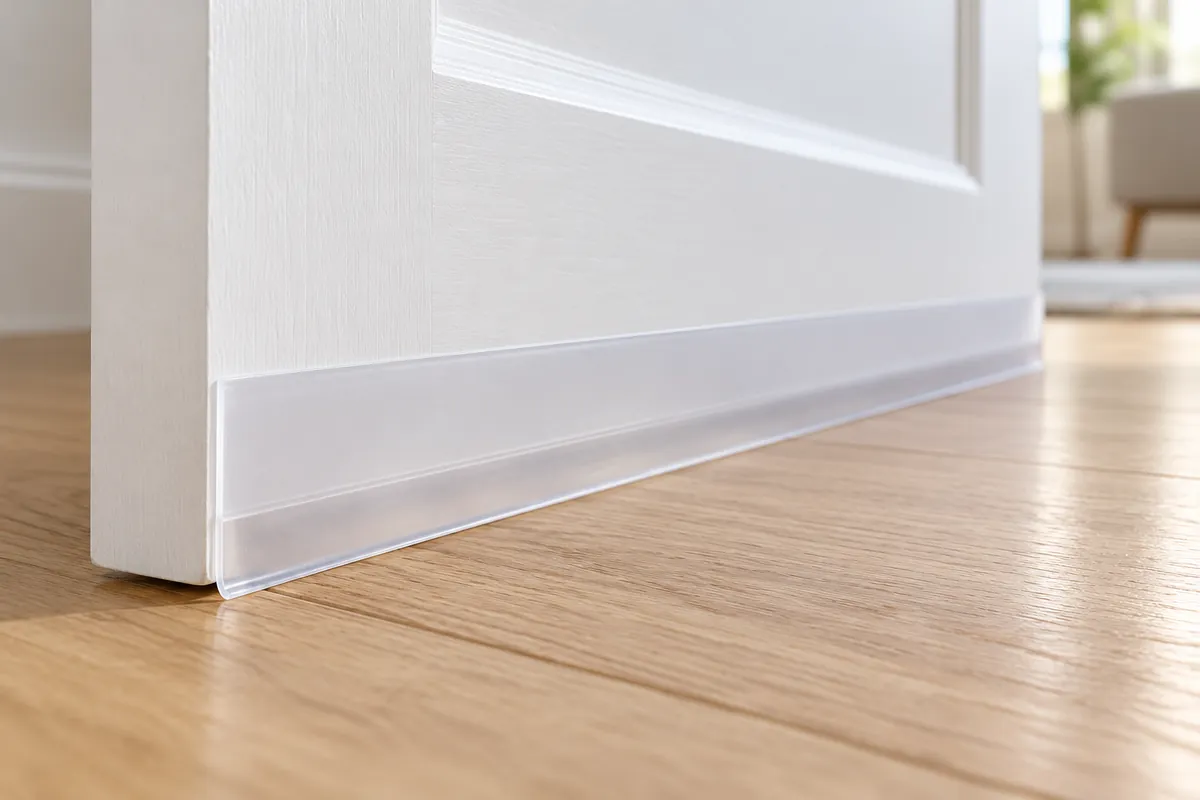 Illustrative
Three common door bottom seals
| Type | What it is | Typical use |
|---|---|---|
| Screw-on sweep | Aluminium or PVC carrier with rubber/brush on the face of the door | Exterior doors |
| Slot-in bottom strip (kerf) | TPE or rubber strip pushed into a slot in the door bottom | Factory-fitted on many doors |
| Self-adhesive sweep | Silicone or TPE sweep stuck to the door face | Interior doors, retrofit |
Replacing a slot-in strip
- Open the door and check the bottom edge for a groove.
- Pull the old strip out from one end (cut it if it is stuck).
- Clean the groove; push the new strip in from one end, fins facing the outside.
- Trim the ends flush with the door.
Replacing a sweep
- Measure the door width and the gap to the floor with the door closed.
- Cut the sweep to width.
- Hold it so the rubber just touches the threshold, mark and screw (or peel and stick).
- Open and close the door – it should not drag.
Quick questions
How big a gap can a door sweep close?
Self-adhesive silicone sweeps cover small gaps under interior doors; larger gaps need a screw-on sweep or a threshold seal. Measure the gap and choose the sweep height to match.
Do you supply door bottom seals in bulk?
Yes – slot-in TPE strips, self-adhesive silicone sweeps and garage bottom seals, from 10 m.
Need a seal for this?
Send your section, gap size or a photo of the old seal – Dora replies usually within 2 hours. Door bottom seals are available from 10 m.