
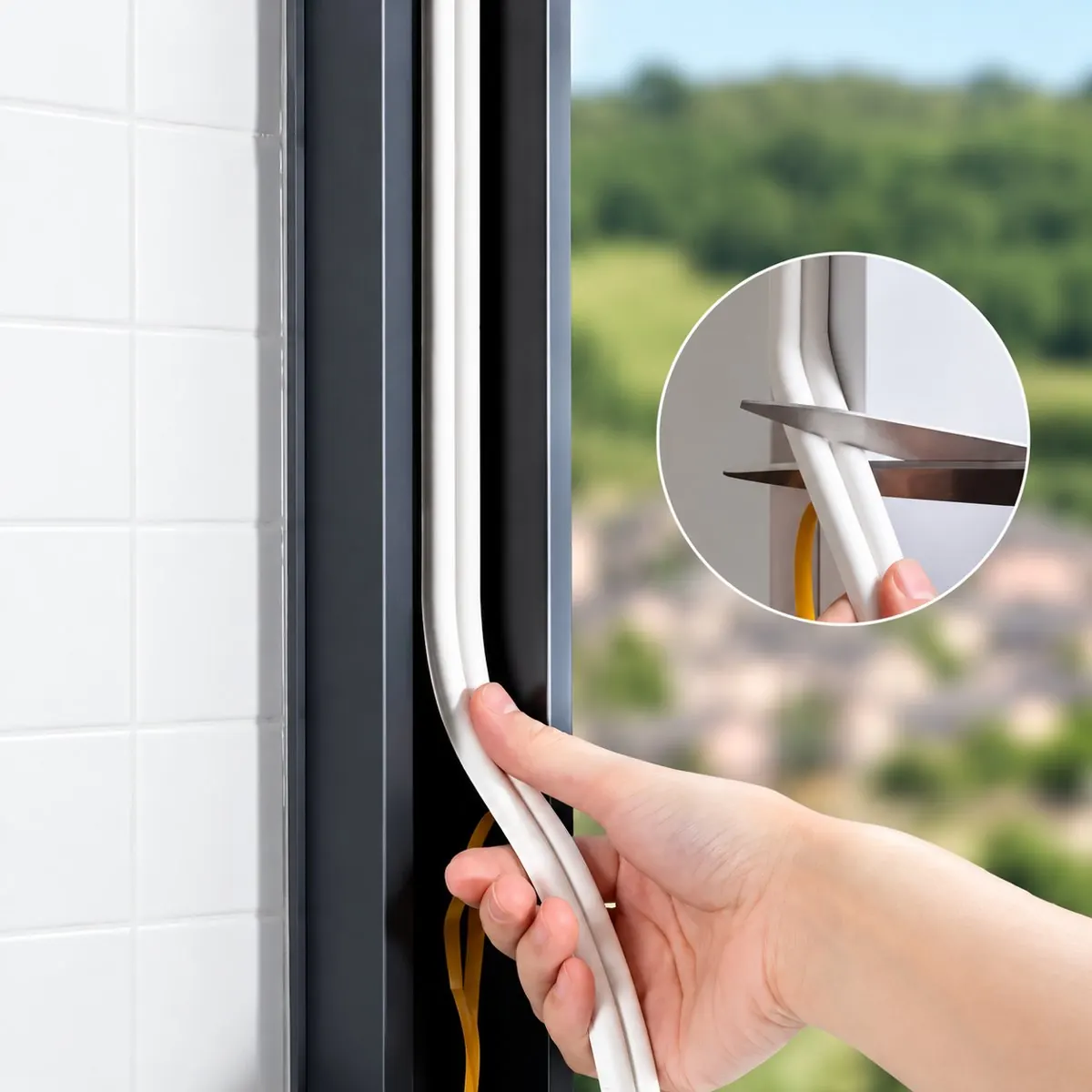
A door kerf is a narrow slot (typically a few millimetres wide) cut into the door frame stop or the bottom of the door. Kerf-in weatherstrip has a barbed fin that pushes into the slot, so no adhesive is needed. To identify your seal, pull out a short piece and measure the fin length, the fin thickness and the size of the foam or bulb.
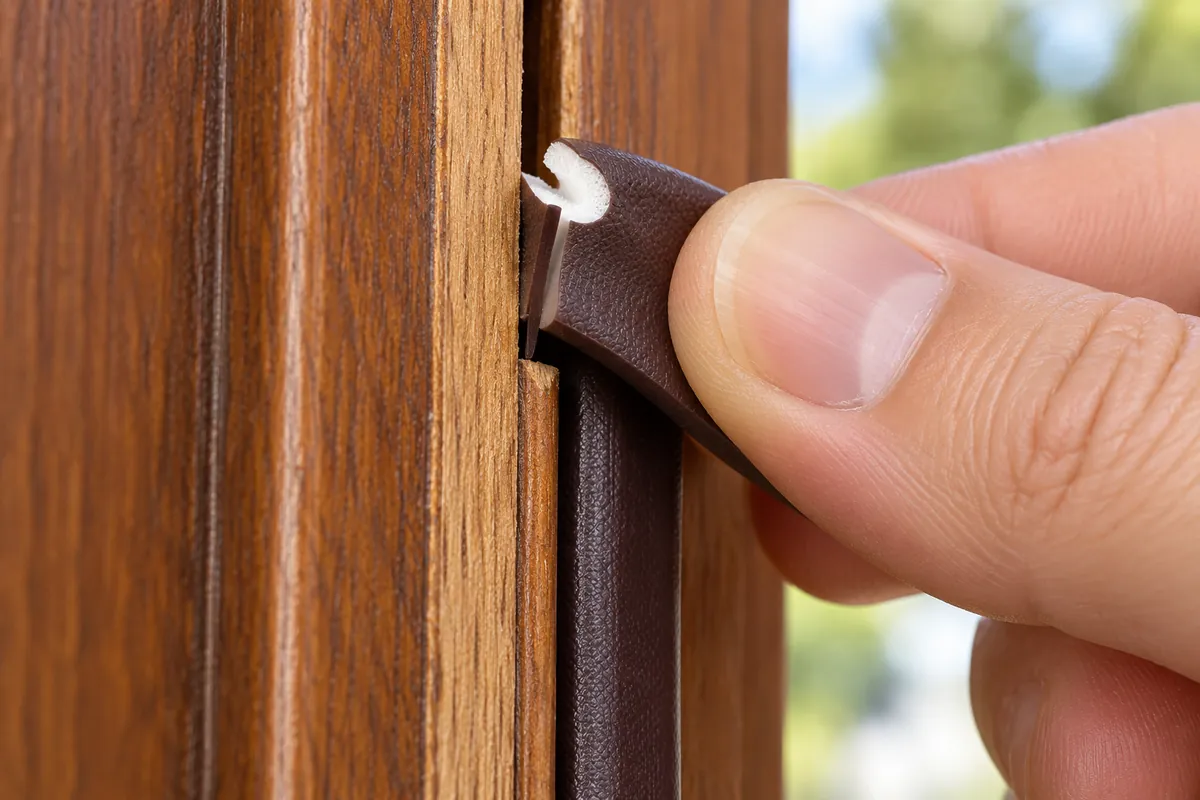 Illustrative
Kerf-in vs self-adhesive
| Type | Fixing | Plus | Minus |
|---|---|---|---|
| Kerf-in | Barbed fin into a slot | Easy to replace, no glue | Frame must have a slot |
| Self-adhesive | Tape backing | Fits any flat frame | Needs a clean, dry surface |
| Screw-on / nail-on | Carrier fixed with screws | Very durable | Visible fixings |
How to identify your profile
- Pull a 5 cm piece out of the kerf.
- Photograph the cut end next to a ruler.
- Measure: fin length, fin thickness, width and height of the foam or bulb.
- Note the colour and material (foam, rubber bulb, silicone).
With the photo and four numbers we can match the closest section or make the profile to your sample – see how to measure a rubber profile.
Common kerf-in seals
PU foam with a PE film and kerf fin (soft, for timber doors), silicone bulb seals and TPE door bottom strips. EPDM and TPE versions recover better after compression than PVC.
Quick questions
Can I use a self-adhesive strip if my frame has a kerf?
Yes, but a kerf-in seal is easier to replace and won't peel. If the kerf is damaged, adhesive strip is the fallback.
What is a kerf in a door bottom?
A slot along the bottom edge of the door that holds a slot-in bottom strip (door bottom sweep).
Need a seal for this?
Send your section, gap size or a photo of the old seal – Dora replies usually within 2 hours. Door & window seals are available from 10 m.