
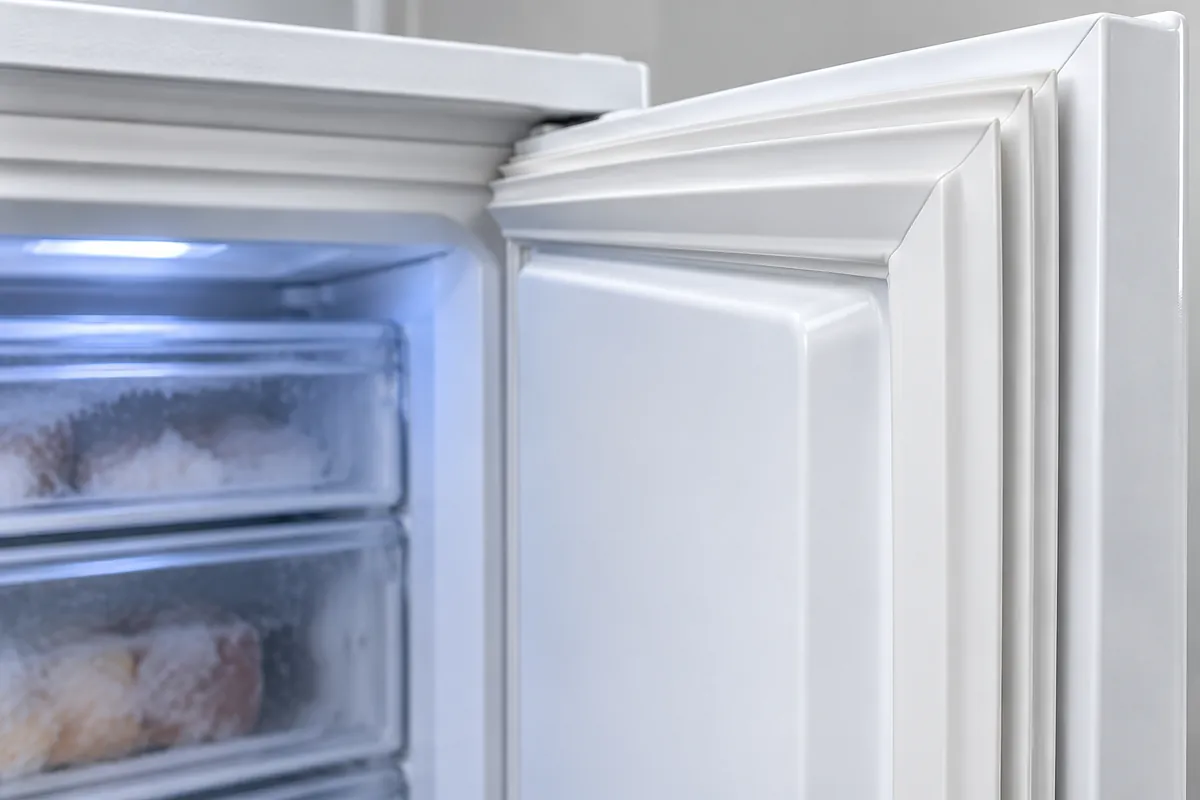
Walk-in cooler doors usually have a magnetic PVC gasket on the hinge, top and latch sides and a sweep or compression gasket at the bottom. Replace them when you see frost or ice at the door edge, condensation, or torn or flattened sections. Measure the door's gasket outside size, take a photo of the gasket's cut end and note how it is fixed (push-in or screw-on).
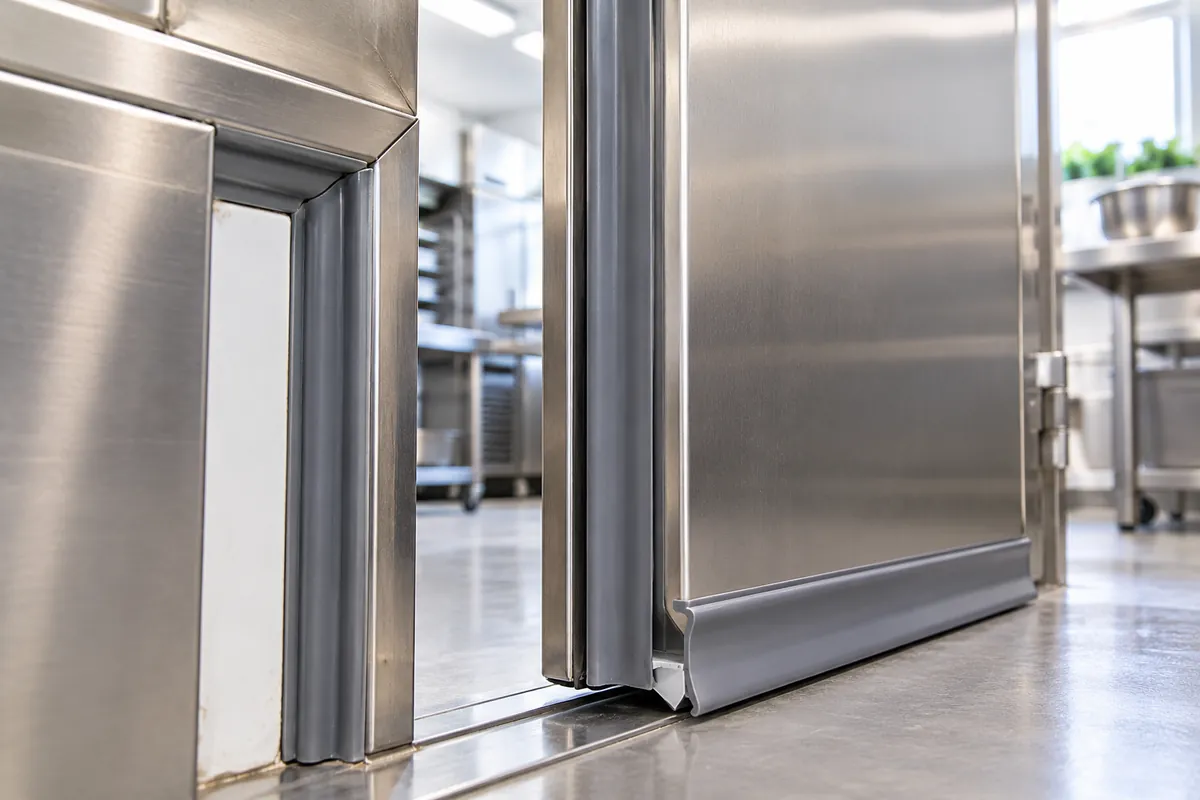 Illustrative
Gasket types on a cold-room door
| Type | Where | Role |
|---|---|---|
| Magnetic gasket | Hinge, top and latch side | Pulls the door tight |
| Compression / bulb gasket | Heavy or insulated doors | Seals by compression |
| Door sweep | Bottom of the door | Seals against the floor or threshold |
Why it matters
A leaking cold-room gasket lets warm, moist air in, which turns to frost at the door and makes the compressor run longer. A worn gasket is one of the cheapest things to fix in a cold room.
For distributors and cold-room builders
Gaskets are quoted by section and size, as straight lengths or made-up frames, in white, grey or black. Send a photo of the cut end next to a ruler and the door sizes. For truck and container doors see refrigerated truck door seals.
Quick questions
How often should walk-in cooler gaskets be replaced?
Inspect them regularly and replace any torn, flattened or iced section; busy doors wear out faster.
Can you make gaskets to my door size?
Yes – as frames to your door size or as straight lengths you cut on site.
Need a seal for this?
Send your section, gap size or a photo of the old seal – Dora replies usually within 2 hours. Fridge & freezer door gaskets are available from 10 m.