
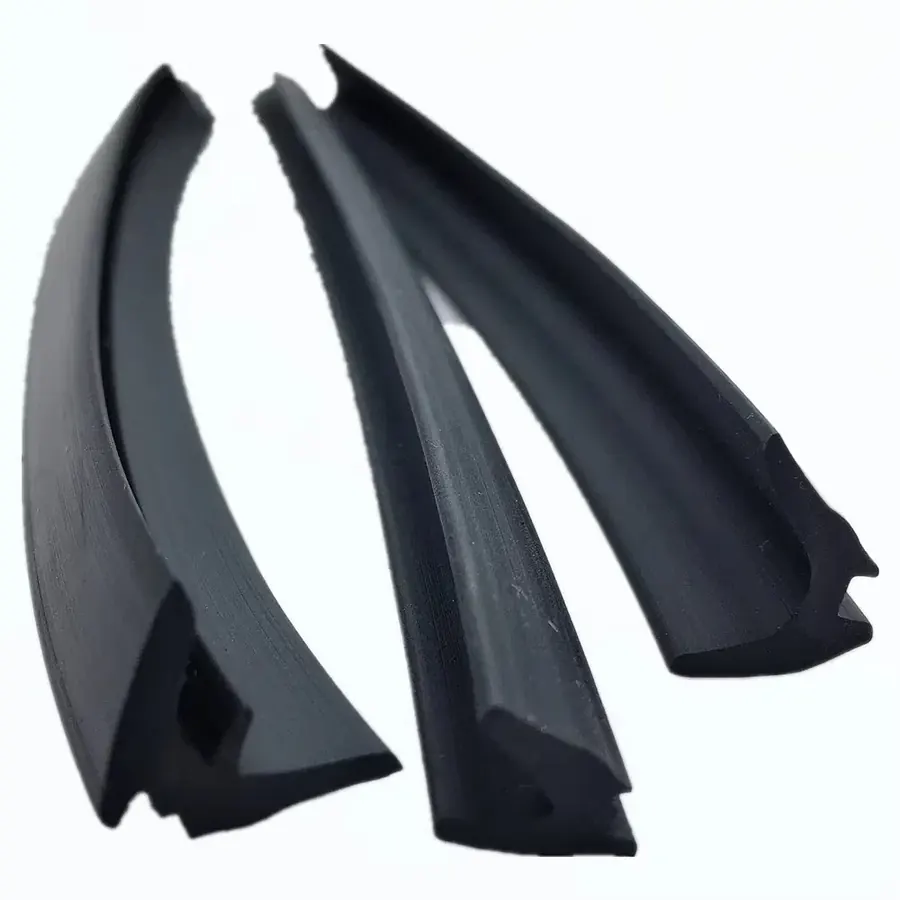
For cold (down to about –40 °C), EPDM and TPE stay flexible and silicone goes lower still (about –60 °C); PVC stiffens below about –10 °C. For heat, silicone works to about +200 °C and EPDM to about +120 °C in general grades. Refrigerated trucks therefore use EPDM lips, ovens use silicone, and PVC is kept for moderate indoor conditions.
Typical temperature ranges
| Material | Low end | High end |
|---|---|---|
| Silicone | about –60 °C | about +200 °C |
| EPDM | about –40 °C | about +120 °C |
| TPE / TPV | about –40 °C | about +100 °C |
| PU foam | about –30 °C | about +80 °C |
| Flexible PVC | about –10 °C | about +60 °C |
General-purpose grades; special compounds extend these ranges. Tell us your conditions.
Typical choices
- Refrigerated truck and cold-room doors – EPDM lips (on a PVC base for truck seals)
- Ovens, dryers, appliance doors – silicone
- Hot sunny facades and car roofs – EPDM
- Indoor shower glass – PVC or silicone
See also
EPDM · Silicone · TPE · PVC · PU foam
Need a seal for this?
Send your section, gap size or a photo of the old seal – Dora replies usually within 2 hours. Custom extruded & moulded rubber parts are available from 10 m.