
A glazing gasket holds and seals the glass in its frame. Most systems use an outer (fixed) gasket that the glass is pressed against and an inner wedge gasket pushed in last to clamp the glass. Choose EPDM for long outdoor life; to replace one, measure the glass thickness, the gap between glass and bead and the shape of the groove foot.
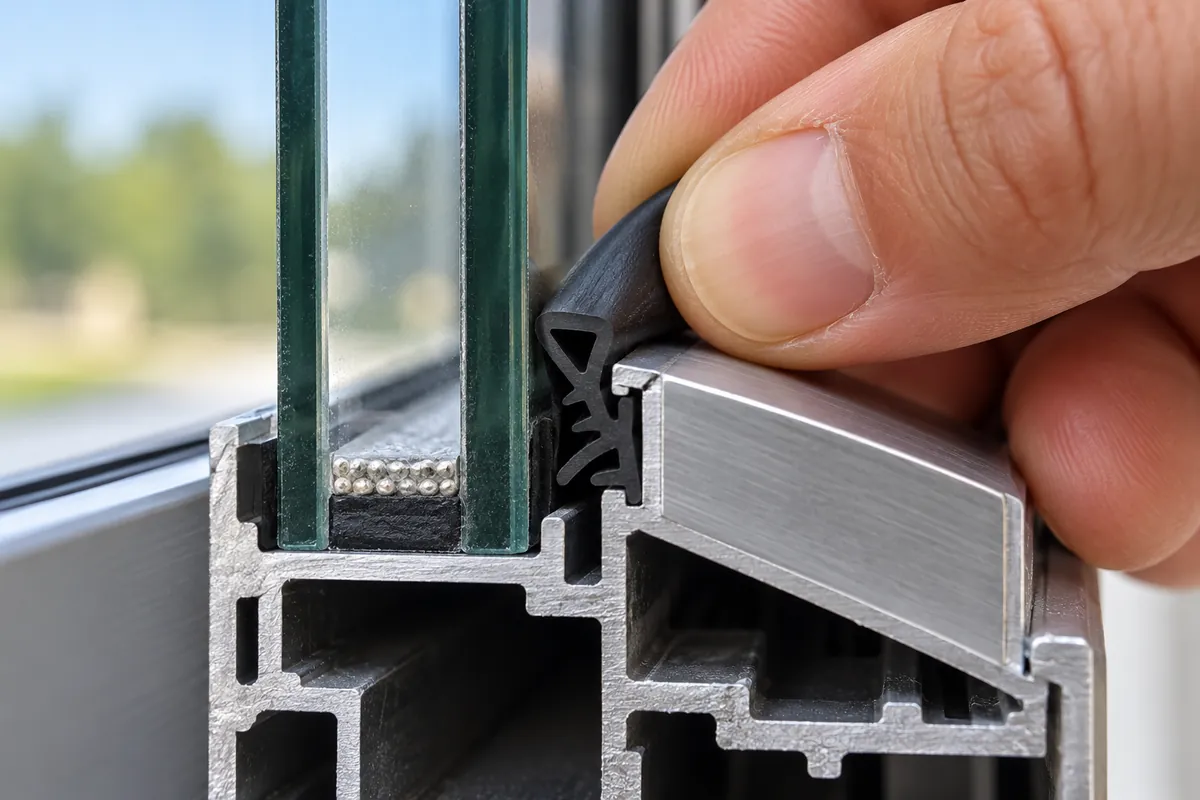 Illustrative
Types
| Type | Fitting | Role |
|---|---|---|
| Wedge (inner) | Pressed in after the glass | Clamps the glass |
| Bulb / fin (outer) | Fixed in the frame first | Glass bears against it |
| U-channel glazing seal | Wraps the glass edge | Simple frames, cabinets, vehicles |
What to measure for a replacement
- Glass or panel thickness
- Gap between glass and frame on each side
- Groove foot shape and width (photo of the cut end)
- Length per window and quantity
Material
EPDM is the standard for windows and façades thanks to its UV and ozone resistance. TPE allows welded corner frames; PVC is used for indoor and low-cost systems. Profiles are made to your drawing or sample – see custom rubber parts.
Quick questions
Why do glazing gaskets shrink?
Low-grade compounds lose volume with age and heat, pulling back from the corners. EPDM with low shrinkage, fitted without stretching, avoids this.
Can you match an old glazing gasket?
Yes – send a short sample or a photo of the cut end next to a ruler.
Need a seal for this?
Send your section, gap size or a photo of the old seal – Dora replies usually within 2 hours. Custom extruded & moulded rubber parts are available from 10 m.